Shaping the future of our community
Our charity was founded in April 2024 with the aim of reversing an accelerating decline in community engagement and social inclusion in Coulter parish that follows the loss of an increasing number of village assets.
Our current priority is to save the last two remaining community venues in our village — Coulter Hall and Coulter Public Library


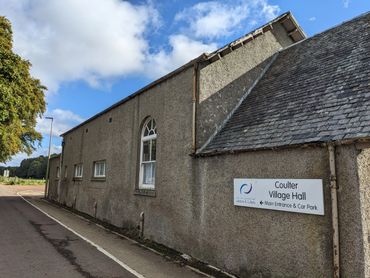




Coulter Hall
A large community activities and events venue, located in the heart of our village
The Coulter Parish records, held in the Mitchell Library in Glasgow, contain correspondence from a Mr Young of Cornhill House, Coulter and the then parish council, enquiring whether the council would "accept of the school for a public hall as a gift of property". Mr Young subsequently purchased the former village school and gifted it to the village in 1911.
The hall served the village for around 50 years in its original form, but it was modest in size and proved inadequate for the needs of the community. A plan was drawn up to extend and develop the hall, and older residents of Coulter have shared their personal stories and experiences of the project that took place in the late 1950s and early 1960s. They told us about the fundraising activities organised by village residents to raise money for the construction of the present building, and we understand that around 50% of the total project cost was donated or raised by the people of Coulter themselves.
Creating a social hub at the heart of our community
In early 2024, South Lanarkshire Council announced plans to close Coulter Hall — a decision that spurred our founding trustees to take action. Determined to keep this vital space open, Coulter Community Trust was formed as a charity and began exploring the feasibility of acquiring and managing the hall as a sustainable community asset. We knew that without a central, accessible venue, bringing people together would be nearly impossible. But with local ownership, the opportunities for community engagement and social inclusion would be limitless.
After carefully reviewing their options, the trustees unanimously decided to move forward with a Community Asset Transfer (CAT) application, based on community engagement, market analysis, and detailed research to ensure the hall’s long-term viability.
A lifeline for local groups
Coulter Hall is home to a number of local groups and clubs that rely on the building as a venue for their activities, and its closure would have put many of them at risk. So in November 2024, we signed a lease agreement with the council and took on responsibility for the hall’s operation and maintenance. This temporary solution gave us time to develop a robust business plan and strengthen our case for the CAT application.
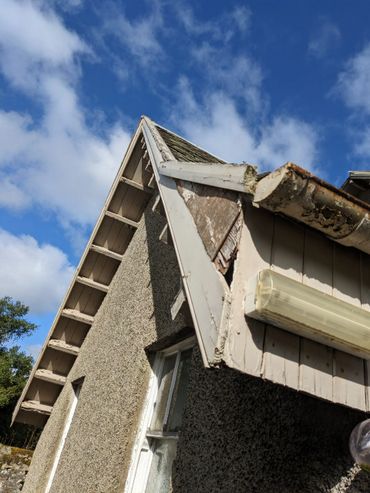
Like many similar buildings, Coulter Hall has suffered from years of neglect. The structure has deteriorated, its appearance is worn, and its energy efficiency falls far short of modern standards. From the outset, it was clear that full refurbishment would be essential.
A community-led vision for the future
As we took control of the hall, we began speaking with architectural practices experienced in similar community projects. Three firms were shortlisted and invited to tender for an initial package of work to RIBA Stage 1, which includes:
- A feasibility study and full building assessment
- Community consultation through public events and focus groups
- Assessment and proposal of a sustainability strategy, exploring solutions like solar panels, battery storage, and a ground source heat pump
We believe this project must be driven by the community. By gathering input from local residents and groups, we can ensure the hall’s design reflects their needs and aspirations.
The project begins
In February 2025, we shared the exciting news that our charity had secured funding from the Scottish Land Fund and SSE Renewables Clyde Windfarm to begin Stage 1 of the project. Then, in March, we announced the appointment of Anderson Bell + Christie as lead architects. As a wholly employee-owned architectural practice, they bring decades of experience working with community groups and development trusts across Scotland, with a strong focus on community participation and sustainability.
The first step in the project was community consultation, for which we partnered with Community Enterprise — an organisation that provides development support to social enterprises, charities and voluntary groups to help turn ideas into reality. Coulter residents, local community groups and hall users were invited to take part in a workshop and open meetings in April and May 2025, when the architects presented three potential design options, sparking thoughtful discussion and inspiring plenty of creative thinking. It was fantastic to see so many people rolling up their sleeves and getting involved!
View the material presented at the workshop (pdf)
DownloadA new vision for Coulter Hall emerges
Stage 1 of the project was completed in July 2025 with the submission of the architect's interim report, which included provisional floorplans for our refurbished hall and detailed costings. We also published our business plan for the hall, which includes a five-year cashflow projection. The high cost of heating Coulter Hall means that the building is financially unsustainable in its present state Whilst CCT has funding in place to ensure that the building remains open in the short term, it's essential that we keep the up the momentum to ensure that the project continues to progress. The architect has now submitted their proposal for stages 2 and 3 to take the project to a planning application, and we are currently applying for funding so that this next phase of work can begin.

Coulter Hall Business Plan (August 2025) (pdf)
DownloadCommunity Asset Transfer
The submission of our CAT application in August 2025 to purchase Coulter Hall from South Lanarkshire Council marked a major milestone in both the development of our charity and our plans for the building’s future. Recognising the scale of the responsibility that comes with ownership, our trustees made a conscious decision not to rush the process. Instead, we took the time to carry out thorough due diligence and careful preparation — ensuring that our application was as strong as possible and that we approached this commitment fully informed and ready for the challenges ahead.
We were delighted to receive formal confirmation in April 2026 that our application had been approved by the Housing and Technical Resources Committee of South Lanarkshire Council. We will now move into the next stage of the process, working with the Council to agree the terms of the transfer and continuing our efforts to secure the funding needed to deliver our plans.

Coulter Public Library
A historic Category B-listed rural library with adjoining house and community garden
Coulter Library was founded in 1838, with the books originally housed in the village school, now part of Coulter Hall, and cared for by the schoolmaster. To promote its use and raise funds for its development, talks were organised during the winter months and other community activities took place throughout the year.
By the time the village was celebrating the library’s half century, enthusiastic local support had enabled the collection to grow to more than a thousand books and it had outgrown the available space in the school. A local landowner, Mr Alexander of Cornhill, produced plans for a new library and reading room with an attached caretaker’s cottage. He also offered to fund the construction of the building, provided that the library committee could secure a suitable site and arrange the transport of building materials. Mr Baillie of Culter Allers donated a plot of land of around a quarter of an acre for the project, and the foundation stone of the new library was laid on 4 August 1888. This is essentially the building that stands today.
No detailed accounts of the library during the period between the building’s construction and the Second World War have yet been found, although its use and the level of local interest appear to have declined during that time. The building was later taken over by the former Clydesdale District Council and appears to have had a chequered history thereafter. Eventually the library closed and a large part of the book collection was removed to Lanark, where it disappeared without trace. The council subsequently proposed to sell the building, but a right of pre-emption enabled it to return to community ownership, and a charitable trust was formed to manage it.
The library was once again run for the benefit of the people of the parish of Coulter. The committee organised fundraising events and the annual Coulter Flower Show, which took place every August until the early 2010s. The building was also regularly used for talks, quizzes and meetings by community groups including Coulter Women’s Guild and Coulter SWRI. A caretaker appointed by the committee was permitted to live in the adjoining house rent free in exchange for carrying out caretaking duties.
The library's decline
By 2020, the activities of the library committee had largely ceased and, although the building technically remained open, it was little used. The arrival of the Covid-19 pandemic eventually forced its closure altogether. Whilst the public parts of the building remained in reasonable condition, the caretaker’s house had fallen into very poor repair. It had become clear that the entire building required extensive renovation and upgrading, particularly to improve its energy efficiency and ensure its long-term sustainability.
The beginning of a new chapter
Coulter Community Trust was established to preserve and develop important community assets within the parish, ensuring that they continue to serve local people for generations to come. Our Trustees recognised the historic and cultural significance of the library as a key part of our village's built heritage - and In late 2025, we secured ownership of the property, marking the beginning of a new chapter in its history.
Our plans include the refurbishment of the library reading room and public spaces to provide flexible accommodation for meetings, small events, exhibitions and social activities. We also hope to improve accessibility throughout the building and significantly upgrade its environmental performance through insulation, heating improvements and other energy efficiency measures.
We have undertaken extensive development and feasibility work in partnership with OCA Studio and Community Enterprise to explore how the library building could be sustainably restored and repurposed for long-term community benefit. This work has included historical research, condition assessment, options appraisal, community consultation, stakeholder engagement, financial modelling and policy analysis.
OCA Studio carried out detailed architectural and heritage work, including investigation into the building’s history and development over time, analysis of its current condition and constraints, and the preparation of early design concepts exploring how the building and grounds might accommodate a range of compatible future uses. Their work has helped identify opportunities to sensitively restore and adapt the building whilst respecting its historic character and significance.
Community Enterprise led a comprehensive options appraisal and research study, supported by funding from the Architectural Heritage Fund and SSE Clyde Wind Farm. This work examined demographic trends, local needs, public policy, rural enterprise opportunities, financial sustainability and comparable case studies from elsewhere in Scotland. It also included a detailed community survey and stakeholder interviews with organisations including Business Gateway, VASLAN and South Lanarkshire Council.
The community consultation demonstrated very strong support for the future restoration and community ownership of the library, with 93% of respondents supporting community control of the building. The research also identified clear support for a mixed-use approach that combines heritage, learning, community activity, enterprise space and affordable housing.
The resulting recommendations envisage the library becoming a flexible rural community amenity centred around learning, heritage, enterprise, sustainability and local connection. Proposed uses include community learning and events, local heritage and genealogy resources, small-scale co-working and enterprise space, and community gardening.
Addressing local housing needs
A central part of the project is the restoration of the library house to provide affordable community housing. Independent research commissioned by the Trust and carried out by South of Scotland Community Housing identified a clear need for smaller and more affordable homes within the parish, particularly for younger people, single occupants, older residents wishing to downsize, and those with existing family or employment ties to the community. The research also highlighted the wider challenges faced by many rural communities, including limited housing choice, rising property prices and the loss of younger residents from the area.
The library house is currently uninhabitable and requires extensive renovation. Returning it to residential use would not only help meet an identified local housing need, but would also secure the long-term future of an important historic building that might otherwise continue to deteriorate. The project aligns closely with a number of South Lanarkshire Council objectives relating to affordable rural housing, sustainability, community resilience and the reuse of existing buildings. By refurbishing and improving the energy efficiency of the property, we hope to create a high-quality and sustainable home whilst preserving the character and heritage of the wider library building.
Coulter Community Trust is a Scottish Charitable Incorporated Organisation, registered with the Office of the Scottish Charity Regulator, number SC053346.
Copyright © 2026 Coulter Community Trust